







Point-to-Point Protocol (PPP) has long been a foundational protocol in network communication, enabling direct connections between two nodes. Historically, it was widely used for establishing connections over dial-up modems and similar data communication links. However, with the evolution of networking technologies and the rise of broadband, many wonder if PPP remains relevant today. In 2024, advancements like fiber optics, 5G, and modern encryption protocols have transformed how networks function. Yet, PPP still plays a significant role in specific applications like VPNs and some legacy systems, keeping it in active use despite the industry’s rapid technological growth. To understand its relevance today, we must revisit its core functionality and where it fits into modern networking systems.
What Is Point-to-Point Protocol and Why Was It Popular?
History of Point-to-Point Protocol
Point-to-Point Protocol, commonly referred to as PPP, was developed as a versatile protocol to manage data transfer between two points over a serial link. Its flexibility and ease of deployment made it a staple in early internet architecture, especially during the days of dial-up connections. PPP replaced SLIP (Serial Line Internet Protocol) by introducing error detection, multi-protocol support, and link negotiation, making it more robust and suitable for more complex networking environments. As internet usage exploded in the 1990s, PPP enabled users to connect to ISPs, forming the backbone of global communication networks. Its longevity comes from the fact that it was designed to handle a variety of network layer protocols, thus ensuring wide applicability.
Key Features and Applications of PPP
PPP became a popular choice for several reasons. Firstly, it was multi-protocol compatible, meaning it could transport different types of data packets. It also introduced built-in authentication methods, such as PAP and CHAP, which made it more secure compared to its predecessor, SLIP. PPP offered error detection, making it a reliable choice for early internet connections. Its ability to encapsulate data for transport over both synchronous and asynchronous connections meant it was widely adaptable. Beyond dial-up, PPP was also used in leased lines, mobile data networks, and even in some ppp protocol-based VPNs, further extending its utility.
Role of PPP in Early Internet Connectivity
During the early days of the internet, PPP was essential in providing a standard way to establish internet connections between home users and ISPs. It worked by encapsulating network layer datagrams, such as IP packets, to transmit them across the serial link. PPP was used to dial into ISPs and create temporary connections, providing users with access to the web. Given that this was before the era of always-on broadband, PPP’s ability to establish point-to-point links on demand was revolutionary. It was also foundational in the development of VPNs, creating a secure and encrypted connection between two points across the internet.
How Does Point-to-Point Protocol Work in Modern Networks?
PPP Authentication Methods
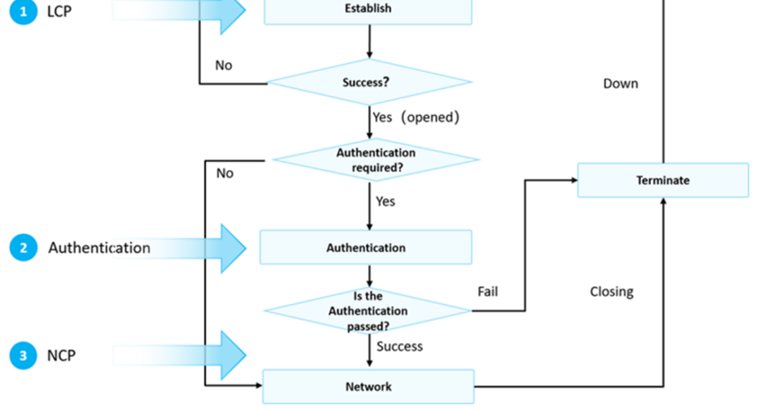
One of the critical features of PPP is its authentication process, ensuring that both ends of the connection are verified before data transmission begins. The two primary authentication methods in PPP are PAP (Password Authentication Protocol) and CHAP (Challenge Handshake Authentication Protocol). PAP operates by sending usernames and passwords across the connection, making it less secure, as these details can be intercepted. On the other hand, CHAP uses an encrypted challenge-response mechanism, offering an extra layer of security. Although PAP is rarely used today due to its inherent security flaws, CHAP remains relevant in certain legacy systems. In modern networking, these authentication methods ensure data integrity, although newer protocols have since surpassed them.
Usage of PPP in VPNs and WANs
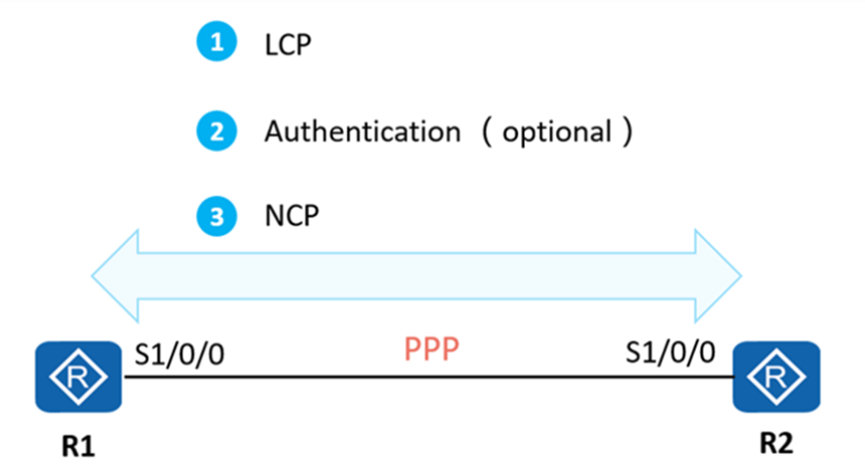
While PPP is no longer the dominant protocol for regular internet connections, it remains highly relevant in specific applications, particularly VPNs and Wide Area Networks (WANs). For example, Point-to-Point Tunneling Protocol (PPTP), an extension of PPP, is often used in establishing VPNs. PPTP encapsulates PPP packets and routes them over the internet, forming secure, encrypted connections. In WANs, PPP is still employed in leased line connections, where direct communication between two routers is required. Despite the emergence of newer protocols, PPP’s simplicity and reliability make it a preferred choice in environments where dedicated, secure links are necessary.
Comparing PPP with Modern Network Protocols
Modern networking protocols like Ethernet and IPsec have become more prominent due to their scalability, speed, and enhanced security features. However, PPP holds its ground in situations where lightweight and flexible connectivity is needed. For example, Ethernet is highly efficient for local area networks, but it lacks the link-layer negotiation and error-checking capabilities that PPP provides. Similarly, while IPsec offers advanced encryption for VPNs, PPP’s simplicity makes it more efficient in certain small-scale applications. Although modern protocols often overshadow PPP, it still remains a vital component in connecting various network systems, particularly in cases of legacy support or lightweight VPNs.
Is Point-to-Point Protocol Still Relevant for Security?
Security Challenges in Modern Networks
With the growing complexity of modern networks, security challenges have evolved significantly. Today, advanced threats such as man-in-the-middle attacks, malware, and sophisticated hacking techniques pose risks to data integrity. Modern security protocols are designed to combat these threats through encryption, multi-factor authentication, and constant updates. PPP, being a protocol developed in the earlier days of networking, doesn’t naturally include these advanced security measures. It relies heavily on external protocols like IPsec or SSL to ensure secure connections. While it has basic authentication methods like PAP and CHAP, these are insufficient by today’s standards and can be vulnerable if not complemented by stronger encryption techniques.
Does PPP Offer Competitive Security in 2024?
Although PPP is not equipped with the security measures seen in contemporary protocols, it can still provide a secure communication method when paired with appropriate technologies. For instance, pairing PPP with protocols like IPsec can enhance its security by offering encryption and protecting the data in transit. However, by itself, PPP’s reliance on older authentication methods such as PAP and CHAP puts it at a disadvantage compared to modern security protocols. In 2024, its relevance largely depends on the environment in which it is used, as newer technologies provide better, more efficient solutions for most networking needs.
Conclusion
Point-to-Point Protocol remains a vital, albeit niche, player in the networking landscape of 2024. While modern protocols have largely replaced it in most applications, PPP’s simplicity, reliability, and flexibility ensure its ongoing relevance in specific use cases such as VPNs, WANs, and legacy systems. The introduction of newer protocols has overshadowed PPP, but for industries still using older systems or requiring lightweight connections, PPP remains a viable solution. While its security measures may fall short in modern contexts, when combined with stronger encryption protocols, PPP can still provide secure, reliable communication. Ultimately, while PPP may not be at the forefront of networking technology, it continues to play a significant role in certain specialized applications.