







You might be noticing little things that do not seem so little anymore. Your child breathes through the mouth at night, baby teeth are not falling out in the order you expected, or the front teeth look crowded even though there are still years of growth ahead. Before you heard terms like bite development or airway concerns, it may have felt like routine checkups were enough. After those first questions come up, though, it is easy to wonder whether you are missing a window to help. The short version is this. The Role Of Jaw Growth Tracking In Coordinated Children’s Dental Care, including pediatric dental care in West Covina, is to help a pediatric dentist and orthodontist spot patterns early, time treatment well, and guide growth instead of reacting after problems become harder to fix.
That can bring relief, but it can also raise new worries. If your child is still growing, how do you know what is normal and what needs attention? And if more than one provider is involved, how do those pieces fit together without turning care into a long, stressful process?
Why does jaw growth tracking matter when your child still has time to grow?
Jaw growth does not happen at the same pace for every child. Some children have enough room for adult teeth to come in well. Others begin to show signs that the upper or lower jaw is growing in a way that may affect the bite, facial balance, speech, or sleep. That is where growth tracking becomes useful. Rather than guessing, providers monitor how the jaws, teeth, and bite are changing over time.
This matters because many orthodontic and dental concerns are easier to guide while a child is growing. If a narrow upper jaw is making crowding worse, or if a lower jaw relationship suggests an underbite pattern, watching growth closely can help the care team decide whether to observe, intervene early, or wait for a more effective stage. A trusted source from the National Institutes of Health explains how craniofacial growth follows predictable stages, even though timing varies from child to child. You can review that background in this reference on craniofacial growth and development.
Because of this, jaw development monitoring for children is not about rushing every child into treatment. It is about reducing surprises. If your child needs only observation, that can be reassuring. If your child needs help, that same tracking can support better timing and fewer missed chances.
What problems can early jaw changes create if no one is watching them?
Sometimes the signs are easy to miss. A child may chew on one side, snore, struggle with crowding, or have front teeth that stick out more than expected. None of those issues automatically means serious treatment is needed, but together they can point to a growth pattern worth following.
Without coordinated monitoring, families may hear separate pieces of advice that do not fully connect. One visit focuses on cavities. Another mentions bite issues. A third raises questions about spacing. When no one is looking at the full picture, treatment can become reactive. That often means more uncertainty, and in some cases more cost later.
Research also supports a team based view of growth and facial development. This peer reviewed review of craniofacial growth patterns highlights how growth assessment helps clinicians understand changing relationships in the face and jaws during childhood. For parents, that translates into a simple benefit. Better tracking can lead to better decisions.
So, where does that leave you? It means your child’s routine dental care and orthodontic planning do not have to compete with each other. They can support each other. Growth tracking in children’s dental care works best when the providers are watching development together, not in isolation.
How does coordinated care between a pediatric dentist and orthodontist actually help?
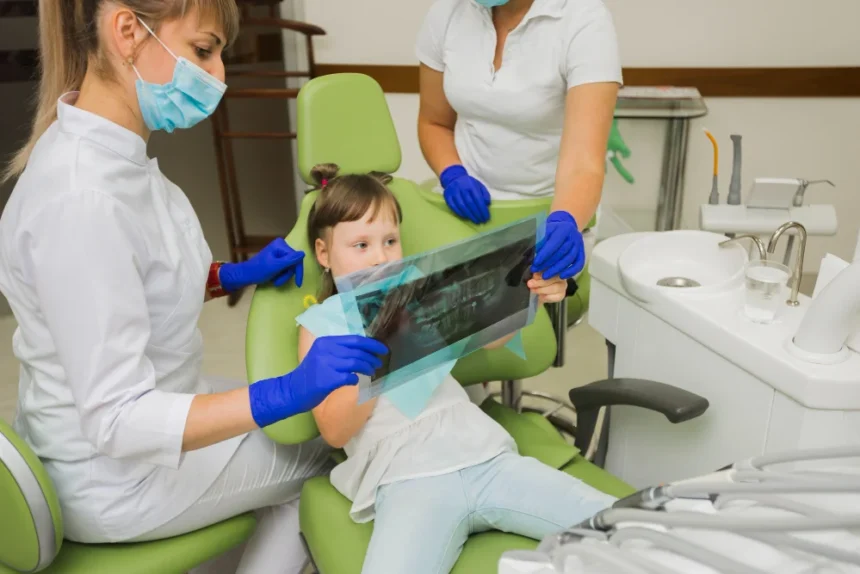
A pediatric dentist often sees your child first and most often. That makes these visits a natural place to watch eruption patterns, jaw function, oral habits, and signs of crowding or bite imbalance. An orthodontist adds another layer by evaluating how the jaws relate to each other and whether growth guidance may help.
Think of it this way. The pediatric dentist is often tracking health, timing, and daily function. The orthodontist is looking closely at structure and future alignment. When both are involved, decisions can be made with more context. A child who needs only space monitoring can avoid unnecessary treatment. A child who may benefit from early expansion or habit correction can be seen at the right time.
Routine exams without jaw growth review
Focus stays mainly on cleanings, cavities, and tooth eruption
Simple and familiar for low risk children
Early bite or jaw issues may be noticed later
Periodic jaw growth tracking
Photos, bite checks, eruption review, and growth comparisons over time
Better timing for observation or early treatment
Requires follow through with scheduled reviews
Coordinated pediatric dentist and orthodontist care
Dental health and facial growth are reviewed together
More complete planning and fewer mixed messages
May involve more than one consultation
What can you do right now if you are worried about your child’s bite or jaw growth?
1. Start tracking what you see at home. Notice mouth breathing, snoring, thumb sucking, chewing on one side, delayed tooth loss, or crowding. You do not need to diagnose anything. You just want clear observations to share.
2. Ask direct questions at the next visit. Ask whether your child’s jaw growth, bite, and eruption pattern look on track. Ask if monitoring is enough or if an orthodontic evaluation would help. A good children’s dental care team should welcome those questions.
3. Keep the timeline, not just the appointment. One normal visit does not always predict the next stage of growth. If follow up is suggested in six or twelve months, that timing matters. Pediatric dentist and orthodontist care often works best when changes are compared over time.
When you want clarity, what is the next best step?
If you have been feeling unsure, you are not overreacting by asking about growth. Children change quickly, and the goal is not to create worry where none is needed. The goal is to make sure your child’s dental care is coordinated, calm, and responsive to how the jaws and teeth are actually developing.
Jaw growth assessment in children gives families something many have been missing, which is a clearer path forward. Whether the answer is watchful waiting or early support, knowing what is happening can make decisions feel less heavy. If concerns about bite development, spacing, or facial growth have been sitting in the back of your mind, now is a good time to schedule an evaluation with a pediatric dentist and orthodontist.