







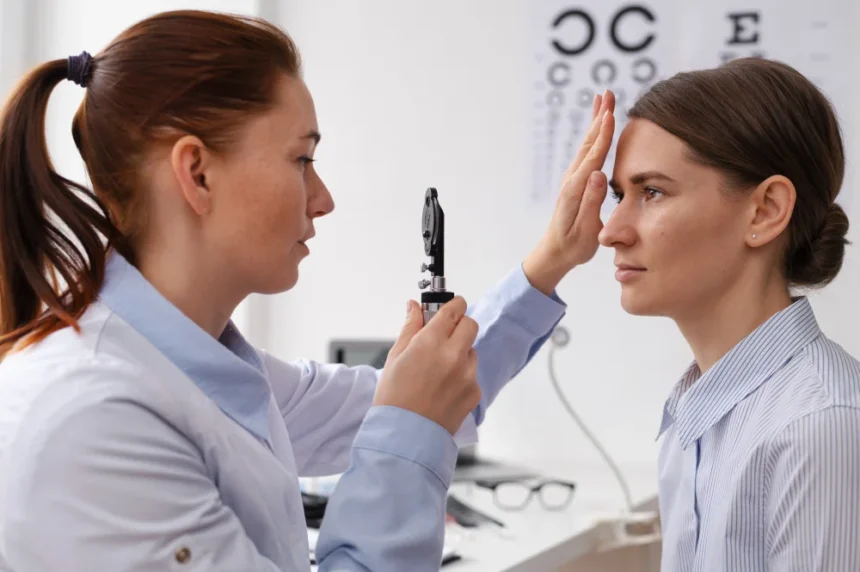
You might be noticing small changes that are hard to explain at first. Maybe road signs look fuzzy a second too late, your phone screen feels harder to read at night, or you keep rubbing your eyes and hoping the blur will pass. That can feel unsettling, especially when your vision affects work, driving, reading, and the simple comfort of moving through your day with ease. If you are looking for an Ophthalmologist in McLean, it may help to seek expert care before symptoms worsen.
When that happens, it helps to know what an eye doctor is actually checking and why. The short answer is simple. A few standard exams can show whether your blurry vision is caused by a need for glasses, trouble focusing, or a deeper eye health issue. The 3 Essential Tests Eye Doctors Use To Check Vision Clarity are usually a visual acuity test, a refraction test, and a slit lamp exam, often along with a dilated eye exam when needed.
Why does blurry vision feel so stressful, and what are eye doctors looking for?
Vision changes can stir up more worry than people expect. You may wonder if you just need a new prescription, or if something more serious is going on. Because your eyes work so quietly in the background of daily life, even a small shift can make everything feel off.
That is why an eye exam for vision clarity is not just about reading letters on a wall. An eye doctor is trying to answer a few key questions. How sharp is your sight at different distances? Are your eyes focusing light correctly? Is there any sign of disease or damage affecting how clearly you see?
So, where does that leave you? Usually in a better position than you think. Many vision complaints have common causes, and the tests used in a routine visit are designed to sort them out quickly and clearly.
Which 3 tests for clear vision matter most during a routine exam?
The first is the visual acuity test. This is the part most people know, where you read letters from an eye chart. It measures how clearly you can see at a set distance. According to MedlinePlus, the visual acuity test helps show whether your distance vision is normal or reduced. If you struggle here, it does not automatically mean something severe is wrong, but it does tell the doctor that your vision needs a closer look.
The second is the refraction test. If you have ever heard, “Which is better, one or two?” that was refraction. This test fine tunes your prescription and shows whether nearsightedness, farsightedness, or astigmatism is making things blurry. It is one of the most useful parts of a vision clarity test because it helps answer a practical question right away. Will glasses or contacts sharpen your sight?
The third is the slit lamp exam. This uses a bright light and microscope so the doctor can examine the front structures of your eye, including the cornea, iris, and lens. It can reveal problems that an eye chart cannot, such as cataracts, inflammation, or surface damage. In some visits, the doctor may also recommend pupil dilation. The National Eye Institute explains why a dilated eye exam can be so important for seeing the retina and spotting eye disease early.
There may also be a pressure check, and in some cases a test of your visual field. Visual field testing measures how wide an area you can see without moving your eyes. This can help detect blind spots and conditions like glaucoma or nerve problems.
What can each test tell you when your vision just does not seem right?
Sometimes the hardest part is not the test itself. It is the waiting and the wondering. What if the blur is only in one eye? What if headaches come with it? What if night driving suddenly feels unsafe?
Each test answers a different piece of that puzzle. The eye chart shows how much your clarity is affected. Refraction shows whether lenses can correct it. The slit lamp exam checks whether the eye’s structures look healthy. Dilation and visual field testing look deeper when symptoms or risk factors call for it.
That layered approach matters because blurry vision is not one single problem. Two people can describe the same symptom and have very different causes. One may only need an updated prescription. Another may have early cataracts. A third may have an issue that needs prompt care.
How do these common vision tests compare in real life?
Visual Acuity Test
Sharpness of vision at a distance or up close
Reading letters or symbols
General vision loss, need for more testing
Refraction Test
How light focuses in your eye
Comparing lens choices, “one or two”
Nearsightedness, farsightedness, astigmatism, updated prescription
Slit Lamp Exam
Health of the front parts of the eye
Looking into a bright microscope light
Cataracts, corneal issues, inflammation, surface injury
Dilated Eye Exam
Retina, optic nerve, and blood vessels
Eye drops, temporary light sensitivity
Diabetic eye disease, retinal problems, glaucoma signs
What can you do right now if your vision seems off?
1. Pay attention to patterns. Notice when the blur happens and what makes it worse. Is it only at night, after screen time, or in one eye? These details can help an eye doctor narrow down the cause faster.
2. Do not wait through warning signs. If you have sudden vision loss, flashes of light, new floaters, eye pain, or a curtain like shadow in your sight, seek urgent care right away. Those symptoms can point to a more serious problem.
3. Schedule a full eye exam, not just a quick screening. A basic vision screening can miss eye disease. If your sight has changed, a full visit with an eye doctor gives you the best chance of finding out whether the issue is simple, correctable, or something that needs treatment.
When should you stop guessing and get your eyes checked?
If your vision has been changing, even slowly, it is worth taking seriously. You do not need to panic, but you also do not need to keep straining and hoping it clears on its own. The right tests can bring relief, answers, and often a very workable next step.
Your eyes do a lot for you every day. Giving them proper attention is not overreacting. It is good sense. If things look less clear than they used to, schedule an appointment with an eye doctor and get the clarity you need.