







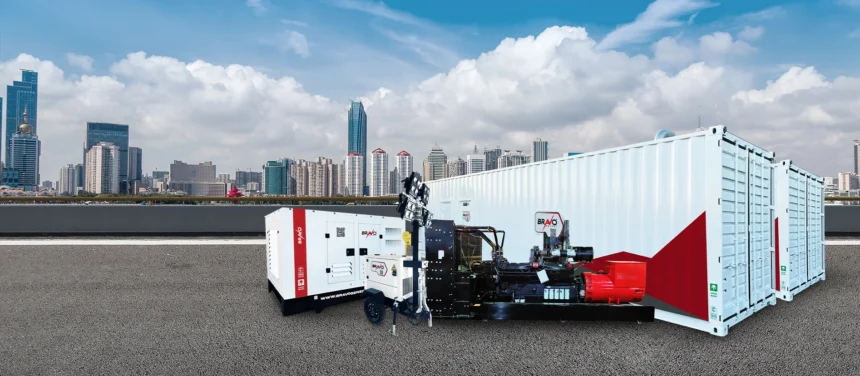
Generators don’t get talked about the way other equipment does. Nobody’s writing trend pieces about them the way they do about electric vehicles or autonomous machinery. But the technology inside them has been advancing nonetheless, and the direction it’s heading has real implications for how large-scale industrial and construction operations will run over the next decade.
The engine at the centre is changing
The most significant shift in modern generators is how the engine manages its own output. Traditional generator engines ran at a fixed speed to maintain frequency, which meant fuel consumption was largely constant regardless of what the load actually demanded. That’s a very inefficient way to run a power source.
Variable speed generator technology has changed that, though. The engine now runs at the speed the load requires rather than a fixed rpm, which means fuel consumption tracks actual demand far more closely. It adjusts to your machines’ needs.
Across a long shift on a site where demand fluctuates significantly between tasks, the fuel saving from this would be very helpful. And it’s a lifesaver for large operations running multiple generators over extended periods.
The combustion side has moved forward, too. Stage V-compliant engines have reduced emissions output to levels that would have seemed impossible a decade ago. And they do it without reducing any power. So, it’s environmentally friendly and business-friendly, which is great news for your compliance department!
Hybrid systems are changing what a generator setup looks like
Hybrid power systems that pair diesel generators with battery storage have officially moved into your workspace! The batteries handle short-duration demand spikes, so the generator runs at its most efficient load rather than constantly shifting due to variable demand. So, you’ve got a generator that runs fewer total hours per shift and burns less fuel while still providing sustained power.
A logistics and construction operation running a large site outside Sharjah restructured its power setup around a hybrid generator configuration two years ago. Their main reason was fuel costs, which had become one of the largest line items in their budget.
Within the first three months of switching to hybrid, fuel consumption had dropped by a margin exceeding the equipment supplier’s projections. The batteries were absorbing the peak demand events that had previously forced the generators to run at full output for short periods, while the generators were operating at a steady load for the majority of their operating hours.
And they saved much more than just fuel! Their schedules eased up since they didn’t have to undergo maintenance every two weeks, and they avoided any unforeseen power outages. That’s the kind of full efficiency that only new generator tech can promise you.
Every industry is feeling the shift
The evolution of generator technology isn’t happening in isolation from the industries that depend on it.
Operations running equipment such as a mobile screening plant on remote or semi-remote sites are particularly sensitive to improvements in power quality. Screening plants processing aggregate or recycled material run motors and vibrating screens that are sensitive to voltage instability, and the improvement in power consistency from modern generator systems has made these operations more reliable and easier to manage.
The entire material processing and civil works sector is seeing similar effects. More consistent power means more consistent output from the equipment connected to it, which directly affects production. So, the generator behind the process is truly a quality variable here!
Generator technology and the road ahead
The future of generator technology is all about hydrogen engines and renewable generation sources. Several manufacturers are already producing units that can run on hydrogen fuel blends!
And while the hydrogen supply infrastructure in the UAE is still developing, the basis has been set. Diesel won’t disappear from generator engines in the near future, but its share of the fuel mix on the most forward-thinking operations will definitely go down as alternatives become more accessible.
For site-based industries specifically, the transition will be felt most clearly in the operations that currently run the heaviest and most sustained power demands. A bitumen spray tanker working on a remote road project, for instance, runs heating systems and pumping equipment that require reliable power throughout the day. As generator technology evolves toward cleaner fuel mixes, the picture for remote civil works changes as well. There’s cleaner power and reduced fuel logistics. And the generator still stays at the centre of how these operations run. What changes is what it’s running on and how intelligently it manages power.