


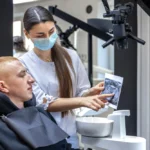





You might be feeling a knot in your stomach just thinking about the dentist. Maybe it started with one bad experience as a child, or years of putting off appointments with a family dentist in Harrisburg until the anxiety became its own reason to stay away. You are not weak. You are not alone. Dental fear is very common, and it can quietly shape your choices in ways that do not feel fair.
At the same time, you may have noticed that some places simply feel safer. A waiting room that reminds you of home. A dentist who remembers your kids’ names. The same receptionist greeting you each time. That sense of familiarity is not just “nice to have.” It can be the difference between canceling an appointment and actually walking through the door.
Here is the short version. Fear of the dentist is real and often rooted in past pain, shame, or a feeling of being out of control. A familiar, family-focused environment can interrupt that fear pattern. When you see the same faces, the same rooms, and the same routines, your brain begins to predict safety instead of danger. Over time, regular visits in a calm, predictable setting can slowly rebuild trust and reduce anxiety, especially with a gentle family dentist who treats you and your loved ones over many years.
Why does the dentist trigger so much fear in the first place?
Dental fear usually does not appear out of nowhere. It often grows out of a mix of painful memories, embarrassment about your teeth, and a sense that you have no control once you sit in the chair. Research shows that a significant number of people avoid or delay care because of anxiety or phobia, which then leads to worse dental problems and more complex treatment when they finally go in.
For many, it started with one moment. Maybe a procedure hurt more than it should have, or no one explained what was happening. Maybe you felt rushed or dismissed. Studies on dental anxiety describe how these early experiences can “condition” a person to expect pain or judgment every time they see the dental chair or hear the drill. The body remembers, even if you tell yourself to be rational.
Because of this tension, you might wonder why some people seem fine at the dentist while you feel panicked before you even leave home. One reason is how safe and understood they feel in that environment. Safety is not just about the clinical skill of the dentist. It is also about the emotional space you walk into.
How do familiar environments calm the fear response?
Think about the difference between walking into a crowded, noisy hospital and stepping into a friend’s living room. Your body reacts before you even say a word. That same thing happens in dental settings. A new, unfamiliar office can trigger your brain to scan for threats. A familiar office can do the opposite.
Psychological research on anxiety and exposure shows that repeated, non-threatening experiences can gradually weaken fear responses. In other words, if you go to the same dentist and nothing bad happens, your brain slowly updates its story. Studies of dental anxiety have found that communication, predictability, and a sense of control are key to lowering fear. You can see some of this discussed in clinical overviews of dental fear and management techniques, such as those summarized in evidence-based reviews on dental anxiety and phobia.
A familiar environment helps in several ways.
First, it boosts predictability. You know where the front desk is. You know how long you usually wait. You recognize the hygienist. Predictability gives your nervous system fewer surprises to worry about.
Second, it creates emotional safety. A trusted family dentist who knows your history can adjust how they speak, how quickly they move, and which tools they use, based on how you tend to react. You do not have to re-explain your fears every time, which lowers stress before the visit even begins.
Third, it builds positive associations over time. When routine cleanings in a familiar office go smoothly, your brain begins to link the dentist with neutral or even positive feelings. Over months and years, that can slowly undo some of the old fear conditioning described in studies of dental avoidance and anxiety, such as those referenced in clinical research like peer-reviewed articles on improving patient comfort and reducing anxiety.
So, where does that leave you if you already feel stuck in a cycle of fear and avoidance?
What are the real costs of avoiding the dentist versus finding a trusted family dentist?
Dental fear is not just emotional. It has practical consequences. When you postpone care, small issues become big ones. A tiny cavity can turn into an infection. A minor gum problem can become advanced disease. By the time you go in, you may need longer, more complex, and more expensive treatment.
Research on dental anxiety has found that people who avoid appointments often end up with poorer oral health compared with those who attend regularly. This is discussed in several academic works, including graduate studies on dental fear and oral health outcomes such as those found in resources like university theses on dental anxiety and treatment patterns. The pattern is clear. The more you avoid, the harder it gets.
On the other hand, building a relationship with a family oriented dentist in a familiar setting may feel scary at first, yet it can actually lower both emotional and financial strain over time. Regular cleanings and checkups catch problems early. Short, predictable visits become your new normal. Instead of bracing for bad news every few years, you start to feel more in control.
Avoid the dentist
Temporary relief from anxiety
Fear grows, visits feel more overwhelming when you finally go
Higher risk of emergencies, more complex and costly treatment
See random new dentists each time
Uncertain, must retell fears at every visit
Limited trust, anxiety may stay the same
Care may be less consistent, problems may be caught later
Commit to a familiar family dentist
Some anxiety at first, but with growing trust
Fear often decreases as visits become predictable and safe
Better prevention, earlier treatment, fewer surprises and lower total cost over time
Looking at it this way, you can see that the environment and relationship are not “extras.” They are part of how you heal the fear itself.
How can you use familiarity to make dental visits feel safer?
So, what can you do if you want to move forward without overwhelming yourself? You do not need to change everything at once. You can take a few focused steps that gently shift your experience over time.
1. Choose one family dentist and commit to starting small
Instead of calling around for the fastest opening, look for a dentist who works with families and talks openly about anxiety. Read their site. Notice how they speak about comfort and communication. When you choose one office, think of it as a long term partner, not a one time fix.
Your first appointment does not have to involve treatment. You can schedule a simple exam and conversation. Tell the team up front that you are anxious. Ask them to walk you through what to expect. The goal is not perfect bravery. The goal is to start building familiarity in a controlled, respectful way.
2. Create your own “familiarity cues” before and during each visit
Your brain calms down when it recognizes patterns. You can help that process by adding your own routines around dental visits. Wear the same comfortable sweater. Bring the same playlist or audiobook to listen to in the waiting room and chair. Use the same breathing exercise while you sit down and while the hygienist sets up.
Over time, these small rituals become signals of safety. Combined with the same faces and rooms in a family practice, they steadily reshape how your body responds to the experience of dental care.
3. Ask for control, not perfection
One of the most powerful ways to reduce fear is to increase your sense of control. Talk with your dentist about simple agreements that help you feel safer. For example, you might agree on a hand signal to pause. You might ask them to explain each step before they start. You might request shorter appointments at first, even if that means more visits.
Evidence based approaches to dental anxiety often emphasize communication and shared control, as highlighted in clinical resources such as guides on managing dental fear and patient communication. When you know you can stop, ask questions, or slow down, your nervous system does not have to fight so hard. Familiarity then grows on top of that sense of control, which makes each future visit feel a little lighter.
Moving toward calmer, more familiar dental care
You may still feel nervous, even after reading all this. That is okay. Fear that has built up over years does not vanish in a day. What matters is that you now understand why familiar environments and long term relationships with a family dentist can soften that fear and help you get the care you deserve.
You do not have to become someone who “loves” the dentist. You only need a path where each visit feels a bit more predictable, a bit more respectful, and a bit less scary. Choosing one practice, building routines around your appointments, and asking for clear control points are all small but powerful steps in that direction.
From here, your next move is simple. Decide that your comfort matters as much as your teeth. Then take one small, concrete step to find and connect with a familiar, family focused dental office that will walk with you at your pace. Over time, those familiar walls and faces can turn the dentist from a source of dread into something you can manage with confidence.