







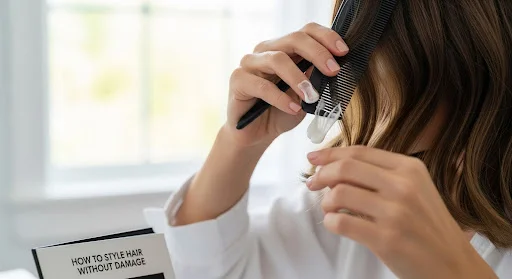
We have all been there. You have had a new cut and your ends are smooth and shiny and you swear to yourself that you will finally get yourself to a good hairdresser. You will work it, make it big, and make it silky. But then reality sets in. You have dinner on Friday, work presentation on Monday and truthfully, there are times that you just need those flawless beach waves because it makes you feel self-confident.
It is a struggle between the desire to have healthy and long hair, and the desire to make your hair look good. It is like you must pick either or, either you wear one of those sloppy buns daily and save your hair or you know that you will run out of the house with a bald head to appear well-dressed.
But the good news is that you do not really need to make a choice here. You can eat your cake and have it–or, to speak more precisely, you can play with your hot tools and not lose your length. It only takes a change of strategy. Breakage prevention does not mean abstinence, but it is about harm reduction and making wiser choices. To make it simple, you can go through the steps of how you can continue to style without compromising the integrity of your hair.
Washing Routine to Prevent Breakage
However, it is true that your preventative measures against split ends begin even before you plug in a curling wand. Your hair washing and brushing regime predetermines how good your hair will be in fighting heat in the future.
Hydration is non-negotiable. And dry hair is brittle, and brittle hair breaks. In case you are aware that you are a habitual heat-styler, you must be on a moisturizing shampoo and conditioner. Search such active components as keratin, argan oil, or shea butter.
More to the point, re-consider the way you treat your wet hair. Wet hair is the weakest. It is also easier to stretch, and when you attempt to do it too far, it does not spring back, it merely snaps. Do not forcefully rub your hair with a cotton towel and this causes friction and frizziness. Rather, squeeze out the rest of the moisture using a piece of microfiber towel or old cotton t-shirt. It may be a minor thing, but in a few months, it helps to prevent your ends being severely worn and torn.
Heat Protectant: The Essential Step for Heat Styling
The only lesson that you can take out of this article is that by no means should heat be used on naked hair. It is the cardinal sin of hair care.
Suppose there was a piece of bread and you put it in the toaster. It comes out crispy and dry. And now suppose you gave that bread a protective coating first. The interior remains softer, right? That is basically what a heat protectant does. It shields, spreads the warmness and confines moisture so that your hair does not cook at once.
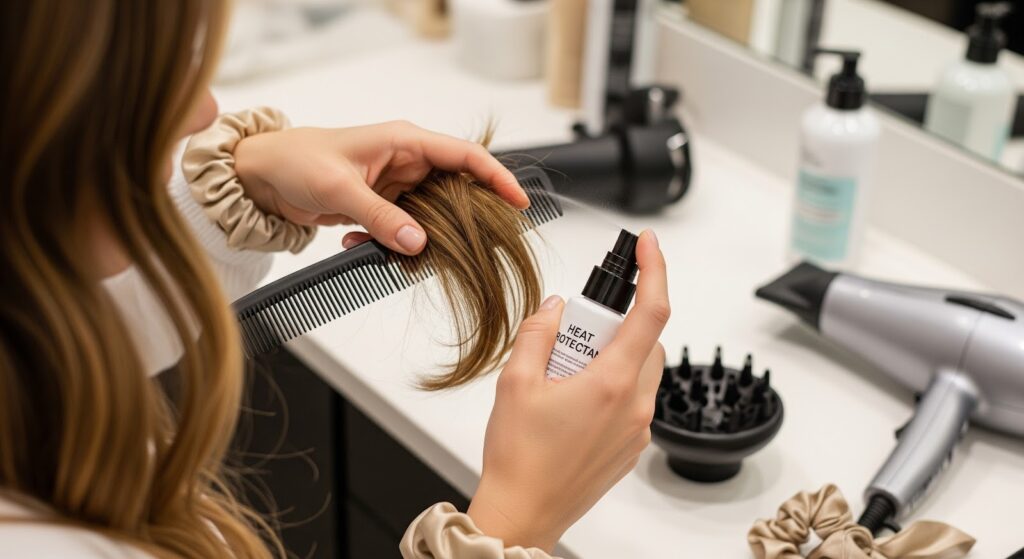
You need to spray a heat protection spray liberally onto damp hair before blow-drying, and on dry hair before flat irons or curlers, arguably a second time also, a light application of the spray. Lasting ten seconds is the difference between fried looking hair after a month and shiny hair.
Best Heat Styling Tools: Ceramic and Ionic Technology
Not every tool is created equal. In case you have a straightener that you purchased in a discount store in 2015, it could be high time to upgrade it. Old or less expensive tools usually possess uneven heating plates. This implies that a single location could be 300 degrees and another location could be 450 degrees and it will burn your hair without your attention.
Search tools with ceramic or tourmaline plates. The negative ions generated by these materials aid in sealing the hair cuticle thereby trapping in moisture and preventing frizzy hair. Better still, acquire equipment that has variable temperature controls.
It is a myth that you must make your hair irons go to the highest temperature (typically 450degF) to get the job completed. You do not need that much heat unless you have incredibly coarse and thick and virgin hair. A temperature of 300-350F is enough to style the hair of most hair textures without permanently damaging the hair structure. Attempt to decrease the dial; you will find that your style fits as well with a lot less harm.
Damage-Free Styling Technique: The One-Pass Rule
The tool is only as good as how you use it. We all have witnessed individuals (or have been the one) who roll the straightener four, five, or six times within a minute.
This is a traumatizing repetition on your strands. Rather than frantic, fast strokes slow down. Take a smaller strand of hair, fluff it up to eliminate knots, and make a single slow deliberate stroke with the iron. This will enable the heat to penetrate in an even manner and set the style instantly. A single pass at a moderate temperature is better than five passes at high temperature.
Heatless Hairstyles and Recovery Days
Assuming that you exercise five days a week, then on the remaining days your muscles need time to rest and develop. Your hair is similar. In case you style it on a Monday to Friday, attempt to leave it off during the weekend.
Use heatless clothes on your off days. Braids, buns, or even simply air drying with a little leave-in conditioner would probably provide your hair with a much-needed break against the thermal stress. In case you simply need to have it styled on a daily basis, change the style. Straight one day, loose pony the next. The heat or tension at the same point every time will loosen that particular part causing it to break where the hair was being styled.
Hair Repair: Protein Treatments and Deep Conditioning
Good habits notwithstanding, constant styling does its job. You must replace the moisture that the heat takes away. Use a deep conditioning mask at least once per week. Find the masks that contain an equal amount of protein and moisture.
The gaps in the hair cuticle are filled with protein, which makes the strand stronger, whereas moisture makes it flexible. However, be wary of excessive consumption of the protein, as it may make the hair brittle instead. It’s all about balance. Oils may equally be a good companion to your ends. It is possible to apply a small drop of lightweight oil to your hair ends only every morning and close the cuticle, covering the look of existing split ends and preventing the new ones.
Maintaining Healthy Hair Long-Term
The only way to keep split ends away during the normal styling process is not through magic products, but through consistency. It is an overall effect of a lower temperature, protection, sleeping on satin, and handling your wet hair.
You do not need to dispose of your favorite tools. All you need to do is admire the material you are dealing with. Pulling your hair as the fragile cloth that it is will allow you to have your beach waves and your smooth bobs without having to harm your hair or make it split in two. It will require a bit of additional effort, but the outcome of hair as good as it is with the desired appearance is well justified.