





Introduction: Why Do We Assume Healing Must Be Loud?
Healing is usually imagined as dramatic. Surgery cuts, medications, silence, and therapies often promise instant results. But real recovery rarely follows such a script. Sometimes, the body doesn’t need louder interventions—it needs a whisper, a signal, a carefully placed nudge. This is the paradox of shockwave treatment: despite its bold name, its power lies in subtlety. Instead of overpowering pain, it reawakens the body’s systems of repair. That makes it less of a battle plan and more of a dialogue between treatment and tissue.
It is worth asking: why would sound waves matter to muscles, tendons, or bones? The answer is neither mystical nor exaggerated—it’s mechanical. Pressure waves enter, cells respond, blood flow improves, and healing pathways reopen. What makes this method intriguing is not only what it does, but also what it avoids. No incisions. No pills. No downtime. Just sound, doing its quiet work.
The Strange Logic of Using Sound to Heal
At first glance, sound doesn’t belong in medicine. It’s invisible, intangible, and fleeting. Yet physics has long taught us that waves carry force. In shockwave therapy, this force is directed at tissues where repair has stalled. That is why the process works: it disrupts stagnation, encouraging the body to restart what it once abandoned. Overlooked blood vessels reopen. Scar tissue softens. Dormant cells switch back on.
What makes this fascinating is its contrast with conventional methods. While most treatments add something—chemicals, surgical instruments, injections—shockwave therapy adds nothing foreign. It manipulates what is already present, relying entirely on the body’s willingness to respond. The invisibility of sound becomes an advantage because it allows penetration without intrusion.
- Waves break barriers inside damaged tissues.
- Healing processes restart without external substances.
- The body is treated as capable, not broken.
Which Pains Refuse to Ignore This Therapy?
Not every discomfort qualifies. Minor strains and temporary soreness resolve on their own. Shockwave therapy is designed for persistence—the pains that outlast ice packs, stretches, or months of waiting. Heel pain from plantar fasciitis, stubborn tendonitis, or frozen shoulders that resist movement often respond strongly. These are injuries with memory, the kind that resist fading until something interrupts the cycle.
The therapy doesn’t belong only to athletes, though many benefit from it. Office workers with repetitive strain, older adults with joint stiffness, or individuals sidelined by long-term injuries can find similar relief. The common factor is the endurance of pain despite conventional care. That is why this method feels fresh: it doesn’t target the easy problems but the chronic, lingering ones.
- Ideal for stubborn, long-lasting conditions.
- Works across ages and activity levels.
- Provides an option where other methods plateau.
What a Session Involves
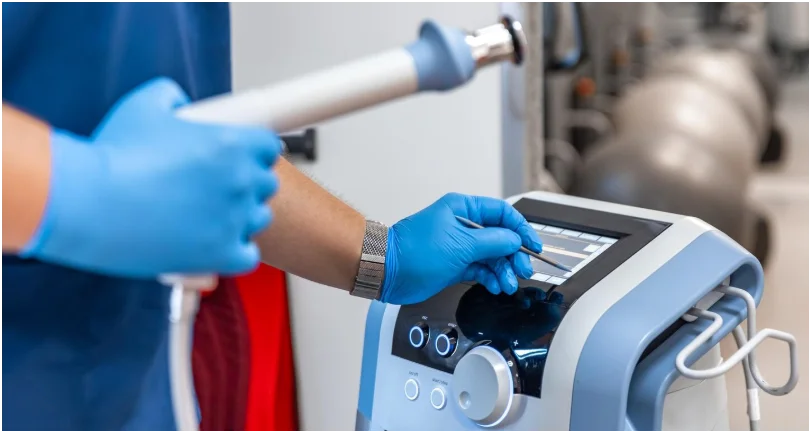
The name “shockwave” sounds clinical and almost violent, but the experience is ordinary. A device directs pulses into the targeted area, and the sensation feels like rapid tapping. Some describe it as odd, occasionally sharp, but rarely intolerable. Sessions are short—often under half an hour—and require no special preparation.
The real story is not in the single session but in the sequence. Relief is cumulative. The body listens, then responds gradually over multiple treatments. Improvement might feel subtle at first, but the momentum grows until mobility and comfort noticeably return. The therapy, in that sense, is more like a rhythm than an event: steady repetition building into something transformative.
- Sessions are brief and straightforward.
- No recovery period is necessary afterward.
- Progress compounds over time.
Why Bypass Pills and Surgery for This?
Each traditional option has a cost. Painkillers trade temporary silence for dependency. Injections promise relief but rarely last. Surgery can repair, but it also risks complications, expense, and a lengthy recovery. Shockwave therapy bypasses these trade-offs by being neither temporary nor invasive. It is an approach rooted in partnership with the body rather than dominance over it.
This perspective matters. By emphasizing restoration instead of suppression, it grants patients a sense of participation in healing. The therapy is not about surrendering control to an external fix but about trusting the body’s systems when guided correctly. That shift—from external reliance to internal capacity—reframes what pain treatment can mean.
- Safer than invasive surgery.
- More lasting than pain medication.
- Root-focused, not symptom-focused.
Closing Reflection: Healing as Dialogue, Not Command
In a world that often equates progress with intensity, shockwave therapy stands as an exception. It doesn’t push harder; it directs smarter. It doesn’t silence pain with force; it reminds the body how to listen. For those caught in cycles of chronic discomfort, the promise is not instant transformation but gradual return—step by step, pulse by pulse. Healing, in this light, looks less like conquest and more like conversation. And sometimes, a whisper achieves what a shout never could.
- Gentle yet effective.
- Patient rather than rushed.
- Proof that subtle methods can yield lasting change.