







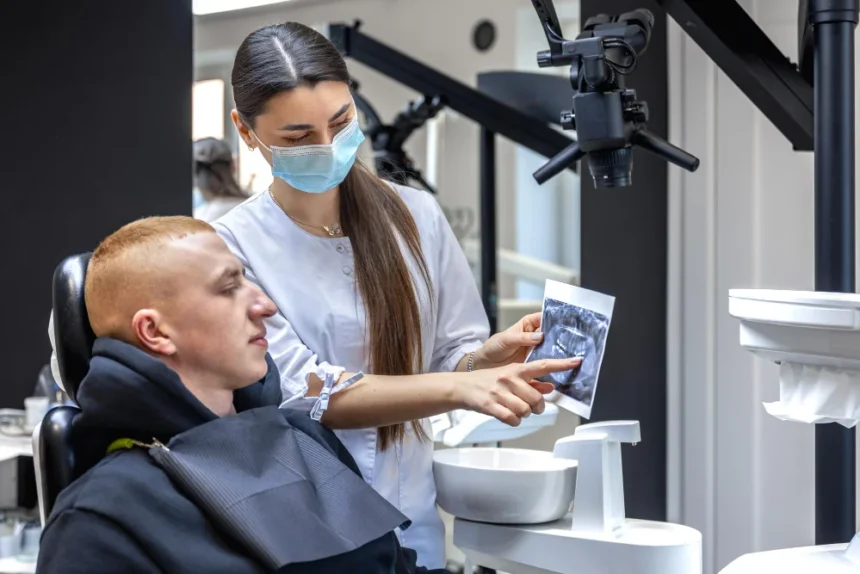
You hear that a tooth needs to be “watched,” and it can feel oddly unsettling. Not bad enough to fix right away, not normal enough to ignore. That middle ground makes a lot of people uneasy because you leave the appointment wondering if something is being missed, or if a small problem is about to turn into a bigger one. If you have concerns, book your next dental cleaning in Garden City.
Sometimes monitoring a tooth is the most careful choice. Your dentist is tracking a spot, symptom, or change that does not call for treatment yet, but does need attention over time. In many cases, watching a tooth helps you avoid work you do not need while still protecting you if the situation shifts. That is often the balance a general dentist is trying to strike.
Monitoring a tooth can be the safest next step
A recommendation to monitor a tooth usually means your dentist sees something worth following, but not something that clearly needs a filling, crown, root canal, or extraction today. Dentistry is not just about treating disease. It is also about timing. If treatment starts too early, healthy tooth structure can be removed without enough benefit. If treatment starts too late, the problem may become harder and more costly to fix.
This is why watching a tooth over time can be a sound plan. Your dentist may compare X rays, check the area during cleanings, test for sensitivity, or ask whether chewing feels different. That pattern matters more than one single moment.
Early tooth decay may not need immediate drilling
One of the most common reasons for monitoring is early decay. A small area of enamel demineralization may show up on an exam or X ray, but it may not have formed a true cavity yet. If the surface is still intact, your dentist may recommend fluoride, better home care, diet changes, and regular follow up instead of placing a filling right away.
That can feel strange if you expected a quick fix, but early decay can sometimes be slowed or even reversed. The National Institute of Dental and Craniofacial Research explains how tooth decay develops, and that process does not always move at the same speed in every person. A dry mouth, frequent snacking, or high sugar intake can push it faster. Strong home care and lower risk habits can help stabilize it.
Cracks and wear do not always need treatment on day one
Tiny craze lines, mild wear, and small fractures are common, especially if you clench or grind your teeth. Some cracks stay unchanged for years. Others slowly deepen and begin to cause pain with biting or temperature changes. If a tooth is still stable and symptoms are minor or inconsistent, your dentist may choose to monitor rather than rush into a crown.
This approach protects your tooth from treatment that may not yet be necessary. It also gives your dentist time to see whether the issue is staying cosmetic or becoming structural. If you start noticing pain when you release your bite, a sharp zing with cold drinks, or a rough edge with your tongue, those details can help guide the next step.
Old fillings and dental work can stay functional for a long time
A filling does not have to look perfect to keep doing its job. Margins can stain. Small edges can wear down. A crown can age without failing. If there is no active decay, no fracture, and no symptom that points to a deeper problem, replacing dental work too early may shorten the life of the tooth over time.
This is one reason a dentist may suggest tooth observation by a dentist instead of immediate replacement. Every time a restoration is removed and redone, a little more natural tooth may need to come with it. Monitoring lets your dentist step in when the benefit is clear, not just when something looks older.
Bite changes and sensitivity can be temporary
Not every sore or sensitive tooth has permanent damage. Sinus pressure, recent whitening, clenching during stress, or even a change in your bite can make one tooth feel “off.” You may be sure something serious is wrong because the discomfort is real, but the tooth may test normal and show no sign of infection or advanced decay.
In that case, monitoring helps separate a passing irritation from a problem that is developing. Your dentist may suggest a softer diet for a few days, a night guard evaluation, fluoride toothpaste, or a recheck. If symptoms settle, you may avoid treatment you never needed. If they worsen, you have a documented baseline and a clearer path forward.
X rays are used carefully when monitoring a tooth
Some changes are visible only over time and with imaging. That includes decay between teeth, bone changes, or the progression of a crack or failing filling. Your dentist may recommend periodic dental X rays to compare what is happening now with what was happening months or years ago. The point is not to take images casually. The point is to gather enough information to make a safer decision.
The FDA outlines how providers approach the selection of patients for dental radiographic examinations, based on needs and risk factors rather than a one size fits all schedule. If you have ever worried that monitoring means endless waiting, this is where follow up matters. Observation should still be active, specific, and documented.
Monitoring can lower cost and preserve more natural tooth
There is also a practical side. Treatment costs money, takes time, and often starts a long maintenance cycle. A small filling can later need a larger filling, then a crown, then more care down the road. That does not mean treatment should be delayed when it is needed. It means timing matters because preserving natural tooth structure usually gives you more options later.
If a tooth is stable, symptom free, and low risk, careful monitoring may be the more conservative choice. If the signs point to progression, treatment becomes easier to justify because there is evidence behind it.
What monitoring a tooth looks like in real life
Situation
Why a dentist may monitor
What may trigger treatment
Early enamel decay
Surface may still be intact and may respond to fluoride and home care
Cavity formation, growth on X ray, new sensitivity
Small crack or wear line
No clear structural failure yet
Pain on biting, deeper fracture, piece of tooth breaking
Old filling with staining
May be cosmetic or stable without active decay
Leakage, recurrent decay, fracture, symptoms
Occasional sensitivity
May be due to clenching, whitening, or temporary irritation
Lingering pain, swelling, worsening response to cold or heat
Three steps you can take right away
Ask what exactly is being watched. You need more than “we’ll keep an eye on it.” Ask whether the concern is decay, a crack, an old filling, bite stress, or something else. Ask what signs would mean the tooth has changed.
Track symptoms between visits. Write down when the tooth hurts, what triggers it, how long it lasts, and whether chewing feels different. A vague ache is hard to compare. A simple note on your phone gives your dentist something useful.
Lower the risk while you wait. Brush with fluoride toothpaste, clean between teeth daily, cut back on frequent sugary snacks and drinks, and wear a night guard if grinding is part of the problem. Monitoring works best when you are helping the tooth stay stable.
A monitored tooth is not a neglected tooth
If your dentist recommends observation, that does not mean nothing is wrong and it does not mean they are brushing you off. It usually means the tooth sits in that narrow zone where careful follow up is smarter than immediate treatment. For many people, that is the most conservative and sensible path.
If you are unsure, ask for the reason, the timeline, and the signs that would change the plan. Clear answers can take a lot of the stress out of waiting. A good general dentist will help you understand why a tooth is being monitored and what happens next.
