







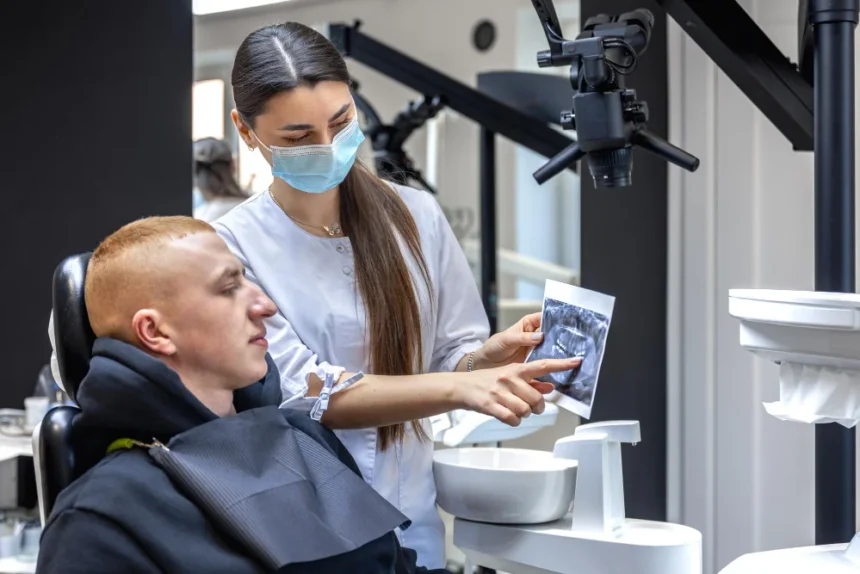
You might be feeling a mix of relief and worry right now. Relief that modern dentistry has come a long way from the painful stories you heard growing up, and worry because you still are not sure what all this new “digital” talk really means for your own teeth, your time, your budget, and how it fits into dental care designed for seniors in Cave Creek.
Maybe you have had a filling fall out, a crown that never felt quite right, or you are putting off treatment because you are afraid of a long, uncomfortable process. You hear your dentist mention scanners, 3D imaging, or “digital workflows,” and you nod, but inside you wonder what that actually changes for you in the chair.
Here is the short version. Digital tools are quietly reshaping restorative care, making it more precise, more comfortable, and often faster. From 3D X rays to digital impressions and AI supported planning, these changes are not about gadgets. They are about giving you restorations that fit better, last longer, and require fewer repeat visits.
So, where does that leave you as a patient who just wants strong, natural looking teeth and as little stress as possible?
Why does restorative treatment still feel so stressful?
Restorative general dentistry has always carried a certain emotional weight. You might feel embarrassed about broken or missing teeth, worried that treatment will cost more than you can manage, or frustrated if you have already “fixed” the same tooth more than once.
The traditional process can add to that stress. Biting into messy impression material that triggers your gag reflex. Multiple appointments for one crown. Temporary restorations that feel rough or come loose. Then the fear that the final result will not match your bite or your smile.
Because of this, many people quietly delay care. A small cavity grows. A cracked tooth splits. Suddenly the conversation shifts from a simple filling to a root canal or extraction. The emotional and financial stakes rise fast.
This is where digital advancements in restorative general dentistry start to matter in a very practical way. They reduce guesswork. They allow your dentist to see more, plan better, and work with higher accuracy, which often means fewer surprises for you.
How are digital tools changing what your dentist can see and do?
Imagine three different situations.
First, a deep cavity near a nerve. With traditional X rays, the dentist makes a best judgment call. With modern 3D imaging and data driven tools, they can often see the true depth and shape of the problem. That can influence whether you need a simple filling or something more involved.
Second, a crown that never quite felt right. In the past, small inaccuracies in impressions or lab work could lead to a bite that felt “off.” Digital impressions and computer guided design help your dentist shape a crown that matches your bite more closely, which can mean less sensitivity and fewer return visits.
Third, planning for multiple restorations or implants. With advanced imaging and digital planning, your dentist can map out how each tooth will function together, instead of treating each tooth in isolation. The National Institute of Dental and Craniofacial Research has highlighted how data science and digital dentistry can improve dental care, especially in planning and decision making.
So what are the specific digital tools that are changing everyday treatment for patients who just need solid, reliable care?
1. 3D imaging that reveals what 2D X rays can miss
Traditional X rays flatten a three dimensional problem into a two dimensional picture. With cone beam CT and other 3D imaging tools, your dentist can see bone, roots, and surrounding structures in much more detail.
For you, that can mean more accurate diagnosis of cracks, infections, and bone levels. It often leads to more targeted treatment instead of “just in case” work. It can also help avoid surprises during procedures, which lowers risk and shortens chair time.
2. Digital impressions that replace gooey trays
Many people remember the old impression trays as one of the worst parts of dental work. You bite into thick material, worry you might gag, and hope it sets correctly. Digital scanners are changing that experience.
Your dentist moves a small camera around your teeth to create a 3D model on a screen. The image is detailed and can be checked immediately. This helps with crowns, bridges, onlays, and other restorations. For you, it often means more comfort, fewer remakes, and restorations that fit more naturally.
3. CAD/CAM design for crowns and restorations that fit better
Computer aided design and manufacturing, often called CAD or CAM, allows your dentist or dental lab to design your crown or onlay on a computer screen using your digital scan. The machine then mills the restoration from a solid block of material with very high precision.
For many patients, this can mean fewer visits for a single tooth, more accurate bite alignment, and less need to adjust the restoration after it is placed. The American Dental Association discusses how digital dentistry and technology are reshaping these everyday procedures.
4. Better materials and devices guided by digital data
Digital planning is also helping researchers and dentists choose and design better materials. Stronger ceramics, improved bonding agents, and smarter devices are being tested and refined with the help of digital models and simulations.
Programs like the NIDCR’s Biomaterials, Devices, and Clinical Technologies Program are supporting this progress. For you, that translates into crowns and fillings that can handle daily chewing, temperature changes, and grinding with less risk of early failure.
5. AI supported planning and early detection
Artificial intelligence is starting to assist dentists with reading X rays and scans. It does not replace your dentist, but it can highlight areas of concern and support clinical judgment.
This support can help catch small problems earlier, such as tiny cavities between teeth or early signs of bone loss. When issues are found sooner, treatment is usually less invasive and less expensive. This is where digital restorative dentistry blends with prevention, which can protect you from larger, more stressful procedures later.
How do the benefits and tradeoffs really compare for you?
You might be wondering how all of this translates into your actual experience, cost, and outcome. The table below gives a simple comparison between more traditional restorative care and care that uses digital tools.
Impressions
Physical trays and impression material, higher risk of gagging, possible remakes if distortion occurs
Digital scans, more comfortable, immediate accuracy check, fewer remakes
Number of Visits
Often multiple visits for crowns or complex work, more time off work or away from family
Potential for fewer visits for some procedures, more efficient scheduling
Fit and Comfort
Relies on manual steps and lab transfers, higher chance of minor misfits or bite adjustments
Computer guided design, improved fit, often fewer bite adjustments
Diagnosis Accuracy
2D X rays and visual exams, some small or hidden issues may be harder to see
3D imaging and AI support, clearer view of roots, bone, and hidden decay
Cost Over Time
May appear lower at first, but repeat work or failures can add up
Technology may add some upfront cost, but better durability can reduce long term expense
Seeing the differences laid out can ease some of the worry. You gain comfort, better information, and usually more predictable results, which can mean fewer surprises and less regret later.
What can you do right now to benefit from these advances?
You do not need to become a technology expert to benefit from restorative dentistry supported by digital tools. A few focused steps can put you in a much stronger position.
1. Ask your dentist specific questions about their digital tools
Instead of asking in general terms, try questions like:
-
“Do you use digital impressions for crowns or bridges, and if so, when?”
-
“What kind of imaging will you use to plan this treatment, and how does it help you decide?”
-
“Can you show me my teeth on the screen and explain what you see?”
The goal is not to challenge your dentist. It is to invite a real conversation so you understand how their tools protect your comfort and your long term outcome.
2. Focus on long term value, not just the lowest initial cost
When comparing treatment options, ask about durability and the likelihood of needing repairs or replacements. A slightly higher upfront cost for a more accurate, digitally planned restoration may save you money, time, and discomfort later.
You can say, “If we use this digital approach, how might that affect the lifespan of the crown or filling compared with a more basic option?” This shifts the conversation from “What is cheapest today?” to “What protects me best over the next ten years?”
3. Do not delay small problems while you wait for the “perfect” solution
It is easy to postpone care because you feel overwhelmed. Yet digital tools are often most powerful when used early, on smaller issues. A small cavity or crack can often be treated conservatively with precise, tooth colored materials when caught in time.
If you have been told you need restorative work, schedule a consultation to review your options with your dentist. Bring a short list of questions about digital imaging, impressions, and planning. Even one focused visit can turn a vague worry into a clear, manageable plan.
You deserve care that feels thoughtful, not rushed or uncertain
If you have had bad dental experiences in the past, it is understandable to feel cautious. Modern digital advancements are not about flashy tools. They are about giving you restorations that look natural, feel comfortable, and stand up to everyday life with less hassle.
You do not have to understand every technical detail. You only need a dentist who uses these tools thoughtfully and is willing to explain how they support your health and peace of mind. With the right questions and a bit of clarity, you can move from worry and delay to steady, confident decisions about your care.
Your smile, your comfort, and your time all matter. You have every right to ask for restorative treatment that respects all three.