







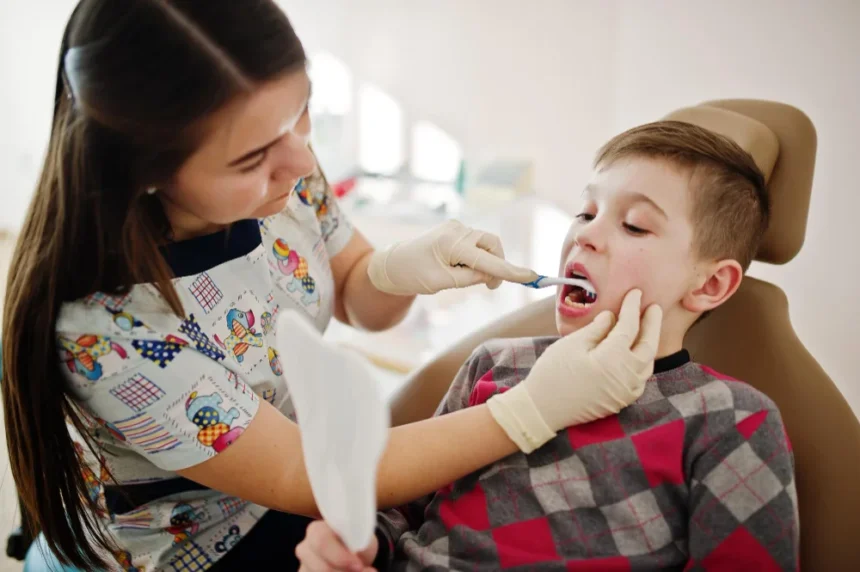
You might be wondering if what you are seeing in your child’s smile is just a phase or something that needs attention. Maybe their baby teeth look crowded, their jaw seems a bit off when they bite, or you have a nagging feeling that “something is not quite right,” yet you are not sure if it is serious enough to call a family dentist or orthodontist or seek Richmond emergency dental care.
That uncertainty can feel heavy. You do not want to overreact, but you also do not want to miss a window where early help could make life easier for your child later on. Because of this tension, you might be asking yourself, “How do I know if my child really needs early orthodontic guidance?”
Here is the short version. There are three big signs that often point to a need for early orthodontic evaluation. Visible crowding or spacing of teeth. Problems with the way the jaws or bite fit together. And habits or speech issues that are affecting how the mouth grows. When these show up, a timely visit to a family dentist or orthodontist can often prevent bigger problems, reduce the time your child might need braces in the future, and protect their confidence as they grow.
So where does that leave you right now? You do not need to have all the answers. You just need to know what to watch for and what your options are.
Why does early orthodontic guidance matter in the first place?
Before looking at the three signs, it helps to understand why timing matters for children’s teeth and jaw development. Children’s mouths are changing constantly. Baby teeth fall out, permanent teeth erupt, and the upper and lower jaws grow at different speeds. Because of this, some problems are easier to guide or correct during childhood than in the teen years or adulthood.
The American Association of Orthodontists explains that there can be a real benefit to some types of early treatment, often called “interceptive” treatment, because it can guide jaw growth, make room for incoming teeth, and reduce the need for extractions or surgery later on. You can read more about these potential benefits of early treatment from the AAO here.
At the same time, not every child needs early braces or appliances. Many children can safely wait until more permanent teeth are in. That is part of what makes this feel so confusing for parents. You do not want unnecessary treatment, but you also do not want to miss a good window to make things easier for your child.
So how do you sort it out? Start by watching for these three common signs that your child may benefit from early orthodontic evaluation.
Sign 1: Are your child’s teeth crowded, spaced, or erupting in unusual ways?
One of the most noticeable signs is what you see when your child smiles or when you help them brush and floss. Crowding, spacing, or teeth that seem to erupt in odd positions can all signal that the jaw and teeth are not working together as smoothly as they could.
You might notice things like:
• Baby teeth that are very close together with no room between them.
• Permanent teeth coming in twisted, overlapping, or behind other teeth.
• Large gaps that do not match what you see in other children of the same age.
• Teeth that seem “stuck” and are not erupting when others already have.
On their own, these do not always mean your child needs early braces. Some spacing is normal, and some crowding improves as the jaw grows. Still, when crowding or spacing looks severe or keeps getting worse, it can be a sign that the jaw is too small for the permanent teeth or that certain teeth are off track.
A family dentist who works with children can help you understand whether what you are seeing is age appropriate. The National Institute of Dental and Craniofacial Research offers helpful information on children’s oral health and development, which you can explore here.
Sign 2: Does your child’s bite look or feel “off” when they chew or smile?
Another major sign has less to do with how the teeth look and more to do with how they fit together. This is your child’s “bite,” and problems with the bite can affect chewing, speech, jaw comfort, and even facial growth.
You might see or your child might report things like:
• The upper front teeth sticking out far over the lower teeth (often called an overbite).
• The lower front teeth sitting in front of the upper teeth when they bite (an underbite).
• The front teeth not touching at all when the back teeth are together, leaving an open space (an open bite).
• The jaw shifting to one side when they close their mouth.
• Difficulty biting into foods like sandwiches, apples, or pizza.
Sometimes these bite issues are subtle. You might only notice them when you ask your child to close their teeth together and smile from the side. Other times, they are obvious from a distance. In both cases, the earlier a provider looks at them, the more options you usually have.
The AAO recommends that children have an orthodontic checkup by around age 7, even if everything looks fine, because early exams can catch these bite problems while the jaw is still growing. You can learn more about child orthodontics and recommended timing from the AAO on this page.
Sign 3: Are habits, speech, or breathing affecting the way your child’s mouth grows?
The third sign is trickier, because it is about habits and function, not just appearance. Certain patterns can slowly change the shape of your child’s jaw or the direction their teeth grow, especially if they continue over several years.
Some things to pay attention to include:
• Thumb or finger sucking that continues past age 4 or 5.
• Frequent use of pacifiers or bottle feeding well into the preschool years.
• Mouth breathing most of the time instead of breathing through the nose.
• Speech issues that seem linked to tongue position, like a lisp.
• Snoring or restless sleep that might hint at airway concerns.
These habits do not automatically mean your child needs orthodontic treatment, but they are worth mentioning to your family dentist. Early guidance can sometimes stop a small habit from turning into a bigger bite problem, like an open bite or narrow upper jaw.
So if you are noticing more than one of these signs together, what should you do next?
How does early care compare with “wait and see” for kids’ orthodontic needs?
Part of your hesitation might come from not knowing how early guidance compares with simply waiting until your child is older. You are not alone in that. Many parents weigh the time, cost, and emotional impact of treatment on a young child against the potential benefits.
The table below offers a general comparison between seeking early orthodontic guidance for children and taking a “wait until later” approach. It is not a substitute for personalized advice, but it can help you frame the conversation with your provider.
When does it begin?
Evaluation around age 7, with treatment only if needed
Evaluation delayed until most permanent teeth have erupted
Typical goals
Guide jaw growth, create space for teeth, address harmful habits
Align teeth and correct bite after growth has mostly occurred
Possible benefits
May reduce need for extractions, surgery, or lengthy treatment later
Avoids early appliances if problems are mild or self-correct
Potential risks
Extra appointments and cost if early issues would have resolved on their own
Some problems become harder to fix, with fewer options
Impact on child
Earlier support for function and confidence, but requires cooperation at a young age
Fewer early demands, but possible frustration if issues worsen before treatment
For many families, the best middle ground is a timely exam with a trusted family dentist or orthodontist, then a clear plan to either monitor growth or treat specific concerns.
What can you do right now to protect your child’s smile?
Knowing the signs is helpful, but action is what truly protects your child’s health and confidence. You do not have to make every decision today. You just need a few concrete steps.
1. Schedule an evaluation when you notice two or more concerning signs
If you are seeing more than one of the signs above, or if your child is around age 7 and has never had a bite check, consider scheduling a visit with a family dentist or orthodontic provider. Bring a list of what you have noticed, such as thumb sucking, snoring, or difficulty biting into foods. A good provider will examine your child, explain what is normal for their age, and let you know whether early care or simple monitoring makes the most sense.
2. Watch and write down patterns at home
Over a few weeks, observe your child in everyday situations. How do they bite into food? Do they breathe mostly through the nose or mouth? Do they complain of jaw discomfort or headaches? Do certain words feel hard for them to pronounce? Jotting down these patterns gives your provider useful information and helps you feel more confident that you are not “imagining things.”
3. Support daily habits that help healthy growth
Even before any orthodontic treatment, small daily habits can support a healthier bite. Encourage thorough brushing and flossing so crowded areas stay as clean as possible. Talk with your child’s dentist about gently phasing out thumb sucking or pacifier use if it is still present. Pay attention to posture and screen time, since head position can affect jaw muscles. These changes do not replace professional care, but they support it and help your child feel involved in caring for their own smile.
Moving forward with confidence about your child’s orthodontic needs
You are not expected to know whether your child needs braces, an appliance, or only routine checkups. Your job is to notice when something does not feel quite right and to reach out for help when that inner voice nudges you.
When you pay attention to crowding or spacing, bite issues, and habits that affect growth, you give your child a powerful gift. You give them the chance to grow into a smile that works well, feels comfortable, and supports their confidence. A thoughtful family dentist or orthodontist can guide you through each step, explain the timing, and make sure any orthodontic treatment for kids is truly in your child’s best interest.
You do not have to decide everything today. Start with a simple conversation with a provider you trust, ask your questions openly, and remember that seeking early information is not overreacting. It is caring.